Sofia Martinez

Designing experiences, creating connections.
transforming digital banking
UX/UI Lead > UX Designer > UI Designer > UX writing
UX/UI implementation strategy
This project focused on the design and implementation of a customized UX/UI design framework for Banco Pichincha, with the goal of improving the digital user experience. Through the application of Design Thinking principles and a user-centered approach, clear design phases, key deliverables, and implementation strategies were defined. The result was a significant improvement in the usability and accessibility of the bank's digital products, optimization of internal processes, and increased customer satisfaction.
From the end of 2024 to the beginning of 2025


My role
My primary role was to lead the creation and implementation of a user-centered design framework for Banco Pichincha. This included:
Definition of the phases of the design process (Contextualization, Empathize, Define, Prototype, Test, Iteration).
Establishment of the deliverables required in each phase.
Development of UX/UI implementation strategies based on Design Thinking.
Analysis of the client's UX maturity and adaptation of the framework to their needs.
Team
Product Designer
Sofia Martinez (Me)
Product Owner Octans
Ricardo Martinez
Product Owner
Rocio Quiroga
Product Designer
Sofía Martínez (Yo)
Product Owner Client
Carlos Moreno
Scrum Master
Carolina Patiño
Consultor de Desarrollo
Pedro Bulles
Arquitecto
Jorge Franco
The challenge
Banco Pichincha, a leading financial institution, sought to optimize its digital experience to meet the growing expectations of its internal and external users. The main challenge was:

The need to standardize and improve the UX/UI design process to ensure the consistency and quality of its digital products, improving operational efficiency and the scalability of the bank's tools.
The importance of deeply understanding user needs and behaviors to create more intuitive and accessible solutions.
The client was at an early stage of UX maturity, which involved creating a framework adaptable to their needs and capabilities.
Design process
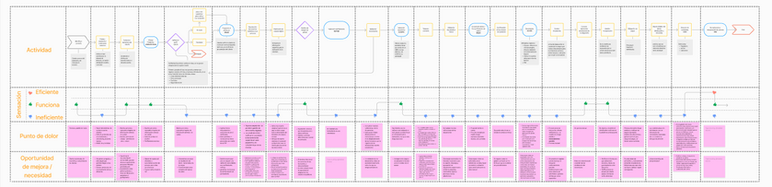
From the design area, we adapt the process to users with Excel visual elements, favoring their technological adoption. We align objectives, guaranteeing security and privacy, and define flows based on documentary processes. We use techniques such as Brainstorming, focus groups and interviews to understand technological skills and needs.

Contextualization / Empathize
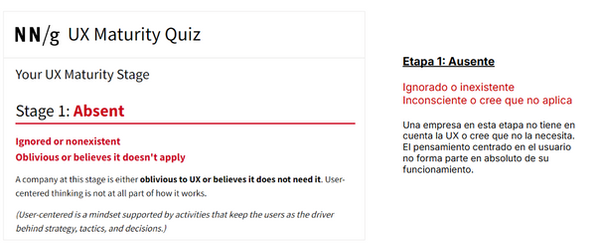
The main objective was to establish a clear understanding of the project and its context. A thorough analysis of the client's environment was conducted, including their design team, product design processes, and the maturity of their design system. The NN/group UX Maturity Test was applied , revealing the need to implement a UX strategy from scratch.


Define
In this phase, the steps to follow in the framework and the potential deliverables required were established . The guidelines, basic requirements, and tools necessary for the successful implementation of the strategy were defined.
40
Hours of initial research and analysis
5
Definition of objectives and priorities
160
Planning and strategy creation
60
Refining UX/UI documentation models
* Given the need for agility and customer focus, the definition process was carried out in a transversal way


Design
In this stage, we focused on bringing the UX/UI implementation strategy to life. A high-fidelity prototype was designed, visualizing the future platform that would host the strategy. This prototype served as a key tool for communicating the platform's vision and functionality to the Banco Pichincha team.
Furthermore, standardized deliverable templates were developed to streamline and optimize the UI research and design processes. These templates include guides for various research and design strategies, enabling the team to create consistent, high-quality deliverables more efficiently.


Test
The strategy and prototype were validated with the Banco Pichincha team, incorporating their feedback to ensure the viability and effectiveness of the implementation.
20
Hours of prototype testing
3
Moderated usability testing with the Pichincha UX/UI team
2
Moderated usability testing with the Pichincha UX/UI team

Results
A robust UX/UI implementation strategy has been defined for Banco Pichincha Colombia, marking a turning point in its design processes. This initiative is estimated to generate a 20% reduction in design time thanks to greater clarity and efficiency in the design process.
A high-fidelity prototype design provides a clear and tangible guide for implementation, facilitating team understanding and commitment.
Lessons learned
This project encouraged me to grow as a UX designer, strengthening my negotiation skills to prioritize accessibility and leading digitalization in a challenging environment. I learned to apply and adapt standardization processes I use in my practice and scale them to an organizational scale, ensuring consistency and efficiency in design. I also reinforced the importance of continuous iteration and client feedback to create impactful solutions.
Digital transformation goes beyond technology. It involves a cultural shift. Empowering teams and involving them in the research and creation process not only increases the organization's UX maturity but also fosters a sense of ownership and ownership of the process.
Credits